Article 44: A Lot of Parisienne Walkways
On February 13th, 2014, Yuzuru Hanyu skated his way into both the Japanese and Olympic record books. Firstly, because he became the first male skater to win a Gold Medal for Japan and secondly, because he broke his own World Record by scoring 101.45 points in the Short Program category. The music he selected to skate to in that short program was Gary Moore’s Parisienne Walkways. No doubt it’s a beautiful, simple guitar piece and will be forever rightly associated with Gary, but what’s the story behind it?
数えきれないほどの「Parisienne Walkways」2014年2月13日、羽生結弦選手が日本記録とオリンピック記録の両方に名を残すスケーティングを行った。男子スケーターとして初めて日本代表として金メダルを、ショートプログラムで101.45点を獲得し、自身が持つ世界記録を更新したことだ。そのショートプログラムで彼が選んだ音楽は、ゲイリー・ムーアの「Parisienne Walkways」だった。シンプルで美しいギター曲であることは間違いなく、ゲイリーといえばこの曲というイメージが定着しているが、その背景にはどのようなストーリーがあるのだろうか。
In 1975, a young Chris Tsangarides entered Morgan Studios in Willesden, London and began work as a tape operator. Chris learnt quickly and before the year was out, had secured his first engineering credit on Judas Priest’s second album, Sad Wings Of Destiny although as he readily admitted, it was more by good fortune than skill. It just so happened that the original engineer fell sick and couldn’t finish the album. Chris spent the next two years learning what all the knobs and faders did on a mixing desk as well as all the different effects (echo, reverb, chorus, delay, etc) and how they could be utilised on an instrument and it was during these early years that he first met Gary Moore.
1975年、若き日のクリス・ツァンガリデスは、ロンドンのウィレスデンにあるモーガン・スタジオに入り、テープ・オペレーターとして働き始めた。クリスはすぐに覚え、年が明ける前にジューダス・プリーストの2枚目のアルバム『Sad Wings Of Destiny』で初めてエンジニアリングのクレジットを獲得したが、本人も認めているように、それは技術よりも幸運によるものだった。たまたま、最初のエンジニアが病気で倒れ、アルバムを完成させることができなかったのだ。クリスはそれから2年間、ミキシング・デスクのノブやフェーダー、エコー、リバーブ、コーラス、ディレイなどのエフェクトを学び、それらがどのように楽器に使われるかを学んだ。
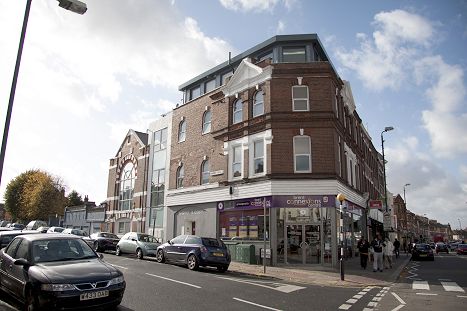
Photo 01 Morgan Studios located at 169-171 Willesden High Road, London. Led Zeppelin, Alice Cooper, Yes, Black Sabbath, Def Leppard, Iron Maiden, The Kinks and Pink Floyd recorded here.
写真01 ロンドンのウィレスデン・ハイロード169-171にあったモーガン・スタジオ。レッド・ツェッペリン、アリス・クーパー、イエス、ブラック・サバス、デフ・レパード、アイアン・メイデン、キンクス、ピンク・フロイドなどがここで録音した。
Whilst Chris was learning how to engineer, Gary was making a name for himself in the UK as a guitarist having previously been in the Irish band Skid Row before joining Colosseum II and then Thin Lizzy and it was while he was in Thin Lizzy, that he was offered to chance to make a solo album for MCA Records.* Naturally he invited his mates from Thin Lizzy to participate in the recording and studio time was booked in Morgan Studios for 1978. By the Spring of 1978, Chris was the default engineer at Morgan, especially for anyone who didn’t have a producer and as Gary had asked MCA to produce his own album, Chris was the perfect choice as he had previously worked with him.
クリスがエンジニアの勉強をしている間、ゲイリーはギタリストとして英国で名を馳せていた。アイルランドのバンド、スキッド・ロウに在籍した後、コロシアムII、そしてシン・リジィに参加。シン・リジィに在籍していた頃、MCAレコードからソロアルバム制作のオファーがあった*。当然、彼はシン・リジーの仲間をレコーディングに誘い、1978年にモーガン・スタジオでスタジオ・タイムを予約した。1978年の春には、クリスはモーガンのエンジニアとして、特にプロデューサーを持たない人のデフォルトになっていた。ゲイリーがMCAに自分のアルバムの制作を依頼したとき、以前一緒に仕事をしていたクリスはぴったりだった。
I first met Chris in early 1983 when he produced Rock Goddess’s second album. Hell Hath No Fury was recorded, of course, at Morgan studios and I sat in the control room every day and watched him work. I learnt a lot. Over the next decade, as well as producing Rock Goddess’s third album for A&M Records, our paths occasionally crossed but then we drifted naturally apart. In 2014, I was stunned to hear he had contracted Legionnaire’s Disease and was fighting for his life. I contacted his wife, Jane, she remembered me and passed on my best wishes to him. I promised her I’d call him as soon as he was well enough to talk. As it happens, a few months later, I was researching some other stuff about Gary and took the opportunity to call Chris and ask him a few questions.
クリスに初めて会ったのは、1983年初頭、彼がロック・ゴッデスの2枚目のアルバムをプロデュースした時だった。『Hell Hath No Fury』はもちろんモーガン・スタジオでレコーディングされ、僕は毎日コントロールルームに座って彼の仕事ぶりを見ていた。多くのことを学んだ。それから10年以上、A&Mレコードでロック・ゴッデスの3枚目のアルバムをプロデュースしたりと、僕たちの道は時々交わりましたが、その後は自然に疎遠になっていった。2014年、彼がレジオネラ症にかかり、命がけで闘っていると聞いて、僕は愕然とした。彼の奥さんのジェーンに連絡すると、彼女は僕のことを覚えていてくれて、僕の心からの激励を彼に伝えてくれた。彼が話せるほど元気になったらすぐに電話すると約束した。それから数ヵ月後、ゲイリーについて調べていて、クリスに電話をしていくつかの質問をする機会を得た。
Chris: “I met Gary in 1975, at Morgan studios, he was in Colosseum II. I was a tape operator on their sessions. I was assigned as the engineer on Gary's sessions for his solo album and he told me on the first day of recording that I could produce it with him.”
クリス:「ゲイリーとは1975年にモーガン・スタジオで会ったんだ。彼は当時、コロシアムIIに入っていた。僕は彼らのセッションでテープオペレーターをしていたんだ。ゲイリーのソロアルバムのセッションでエンジニアを任され、レコーディング初日に "一緒にプロデュースしよう "と言われたんだ。」
Morgan had four studios and the sessions took place in Studio 1 which had a 24 input/16 output track desk linked to a 16-track 3M tape machine. At times, different drummers and bass players were used along with Don Airey on keyboards but for three of the songs, Don’t Believe A Word, Fascists and Parisienne Walkways, the core of Thin Lizzy (Moore, Phil Lynott and Brian Downey) were recorded live for the backing tracks. Gary’s guitar sound was achieved by him playing his 1959 Les Paul that he had purchased from Fleetwood Mac’s Peter Green, put through a Mess Boogie Combo plugged into a 4 x 12” speaker cabinet. I asked Chris about how many takes there were of the track and the solo.
モーガン・スタジオには4つのスタジオがあり、セッションはスタジオ1で行われ、24入力/16出力のトラックデスクと16トラックの3Mテープマシンがリンクされていた。キーボードにドン・エイリーを起用し、ドラマーとベースが異なる場合もあったが、「Don't Believe A Word」「Fascists」「Parisienne Walkways」の3曲は、シン・リジーの中心メンバー(ムーア、フィル・ライノート、ブライアン・ダウニー)がバックトラックとしてライブ録音された。ゲイリーのギターサウンドは、フリートウッド・マックのピーター・グリーンから購入した1959年製のレスポールを、4×12インチのスピーカーキャビネットに接続したメッシ・ブギー・コンボに通して演奏することで実現した。クリスに、トラックとソロのテイク数を聞いてみた。
Chris: “The backing track was done in a couple of takes and the solo with the long note done in just one take.”
クリス: 「バッキングトラックは2、3テイクで、ロングノートのソロは1テイクで出来た。」
The string overdubs were played on an ARP Sinola string synth, one of the leading synthesizers of that time and the mandolin sound was achieved by fixing a microphone to the sound hole of a semi-acoustic Rickenbacker guitar which Gary played and Chris recorded acoustically, without plugging it in to an amp. Aside from the vocals, the only other overdubs were the descending bass notes at the start of the verses and the accordion.
弦楽器のオーバーダビングは、当時の代表的なシンセサイザーのひとつであったARP Sinolaストリング・シンセで演奏した。マンドリンの音は、リッケンバッカーのセミアコースティックギターのサウンドホールにマイクを固定し、ゲイリーが弾き、クリスがアンプに接続せずにアコースティックで録音することで実現した。ボーカル以外のオーバーダビングは、詩の冒頭のベースの下降音とアコーディオンだけだった。
Chris: I can't remember how it came about but I remember that Phil pumped it (the accordion) and Gary played the keyboard! The intro was tracked with an electric upright bass. We had to mark the notes with china graph pencil so Phil would be able to play it.
クリス: 「どういう経緯でそうなったかは覚えていないけど、フィルが(アコーディオンを)ポンピングして、ゲイリーがキーボードを弾いていたのは覚えている!イントロは、エレクトリック・アップライト・ベースでトラックされた。フィルが弾けるように、チャイナグラフの鉛筆で音符に印をつけていたんだ。」
The album, Back On The Streets, was released in the UK on September 30th, 1978 but didn’t make much of an impression on the charts; Parisienne Walkways was released as a single April 21st, 1979 peaking at No. 8 on the 18th May.
After it was a hit, many people noticed by that the guitar melody was identical to that of a Jazz standard called Blue Bossa written by Kenny Dorham in 1963. Given that Kenny was still alive in 1978 when Gary recorded Parisienne Walkways, this meant that the writer had breached copyright and could be sued for not crediting Kenny Dorham and for not paying the due royalties. But who actually was the writer? The song writing credit seemed to differ everywhere. There is no doubt that Gary wrote the music and Chris remembers Phil coming up with the lyrics one day in the studio so the credit should be Moore-Lynott which the UK single had but the album credited Phil Lynott only. Various European releases credited either Moore or Lynott separately and sometimes together. Furthermore, the sheet music published by Mr Sam Music and administered by Heath Levy Music of London was copyrighted in 1978 as ‘Recorded by Gary Moore on MCA, written by Donna Campbell’ and indeed, the 1978 Demonstration disc pressed by Jet Records for the USA credits her as the sole writer. So, who was Donna Campbell?
この曲がヒットした後、多くの人が、ギターのメロディが1963年にケニー・ドーラムが書いた「ブルー・ボッサ」というジャズのスタンダード曲と同じであることに気づいた。ゲイリーが「Parisienne Walkways」を録音した1978年当時、ケニーはまだ生きていたのだから、この作家は著作権を侵害したことになり、ケニー・ドーラムをクレジットしていない、ロイヤリティを払っていないとして、訴えられる可能性があった。しかし、実際には誰が作詞者だったのだろうか。曲作りのクレジットはどこも違っていたようだ。ゲイリーが作曲したことは間違いなく、クリスはフィルがある日スタジオで歌詞を思いついたことを記憶しているので、UKシングルではムーア=ライノットとクレジットされているはずだが、アルバムではフィル・ライノットだけがクレジットされていた。ヨーロッパの様々なリリースでは、ムーアとライノットは別々に、時には一緒にクレジットされていた。さらに、ミスター・サム・ミュージックが出版し、ロンドンのヒース・レヴィ・ミュージックが管理している楽譜の著作権は1978年に「録音:ゲイリー・ムーア(MCA)、作詞:ドナ・キャンベル」となっており、実際、ジェットレコードがアメリカ向けにプレスした1978年のデモ盤には、彼女一人が作者としてクレジットされていた。では、ドナ・キャンベルとは何者なのか?
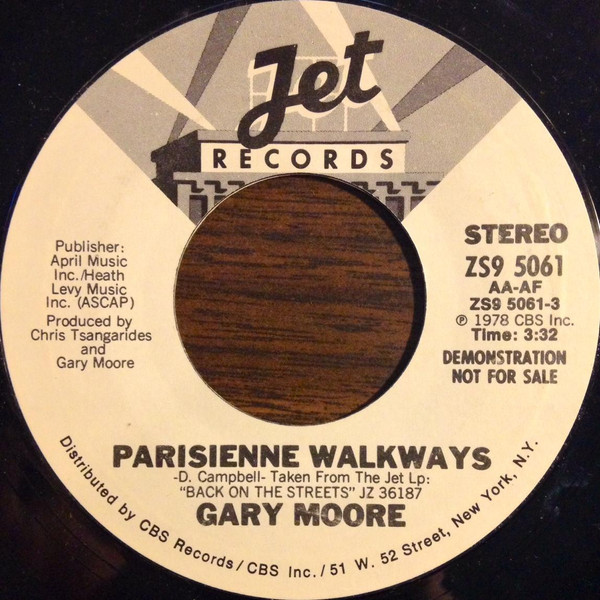
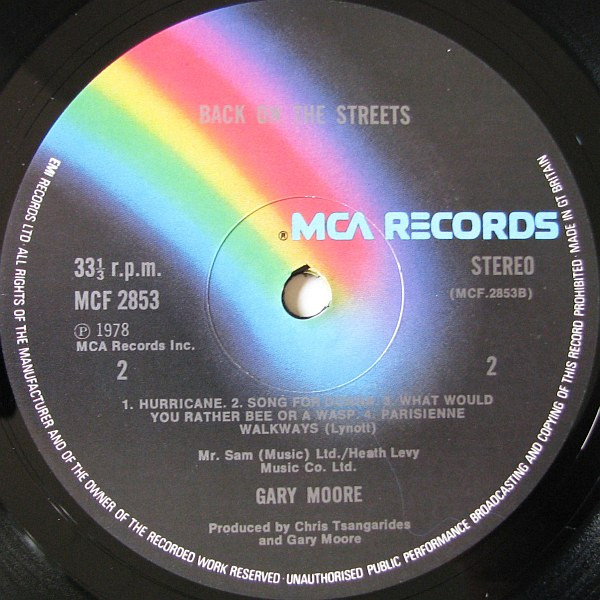
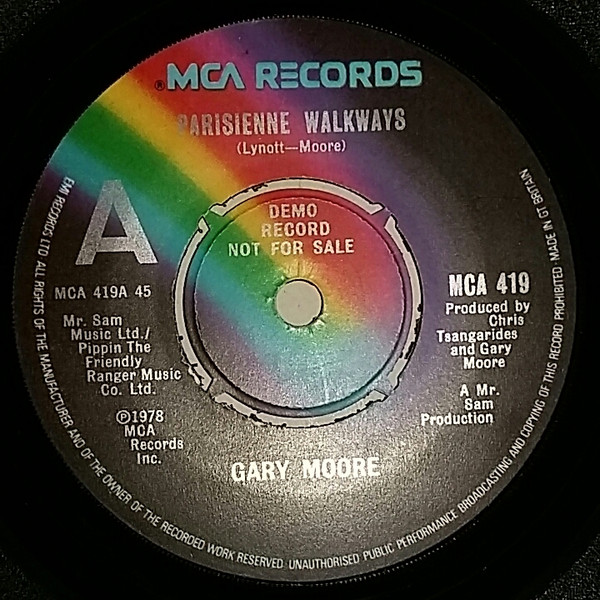
Photos 02a 02b 02c Note the different songwriter credits.
写真 02a 02b 02c 作曲者クレジットの違いに注意。
Campbell was Gary’s girlfriend and a quick look at the other writing credits on the album reveals that she had a hand in quite a few of the songs although exactly how much she contributed is dubious. Campbell left home when she was fifteen years old after hearing Skid Row on the John Peel Show and hitchhiked to London, eventually finding a way to meet Gary at a BBC session. They became lovers and according to Donna, lived together for five years while she worked occasionally as photographic model. Shortly after Back On The Streets was released, Donna met Gary Holton, an upcoming actor and lead singer of The Heavy Metal Kids. She left Moore for; she married Holten in 1979. It was at this time that her name seems to have been removed from the song writing credits as future singles issued by Jet Records of Back On The Streets and notably, Song For Donna, credited Moore only. Campbell split with Holten after two years and attached herself to various rock stars including The Clash’s drummer Topper Headon, Jim Phantom of The Stray Cats and before Sharon, Ozzy Osbourne. Today she lives in Taunton in England and refuses to talk about her contribution to Parisienne Walkways or the rest of the album.
キャンベルはゲイリーの恋人で、このアルバムの他の作曲クレジットを見ると、彼女がかなりの曲数に関与していることがわかるが、正確にどの程度貢献したかは疑わしい。キャンベルは15歳の時、ジョン・ピール・ショーでスキッド・ロウを聴いて家を出て、ヒッチハイクでロンドンに行き、最終的にBBCのセッションでゲイリーと出会った。二人は恋人になり、ドナによると、彼女が写真のモデルとして時々働く間、5年間一緒に暮らしたという。『Back On The Streets』がリリースされた直後、ドナは俳優でヘビーメタル・キッズのリードボーカルだったゲイリー・ホルトンと知り合う。彼女はムーアのもとを去り、1979年にホルトンと結婚する。この頃、ジェット・レコードから発売された『Back On The Streets』や、特に「Song For Donna」のシングルでは、ムーアだけがクレジットされていたため、彼女の名前は作曲クレジットから削除されたようである。キャンベルは2年後にホルテンと別れ、ザ・クラッシュのドラマー、トッパー・ヘドン、ストレイ・キャッツのジム・ファントム、シャロンの前にはオジー・オズボーンなど、さまざまなロックスターと付き合った。現在、彼女はイギリスのタントンに住んでおり、「Parisienne Walkways」への貢献や他のアルバムについて話すことを拒否している。
Why Campbell is credited at all will probably remain a mystery but the dispute over the song writing credit with Kenny Dorham was eventually settled quietly. However, it did stop Gary performing the song live for a long time. These days the credit on any release is usually to Moore/Lynott (unless they record label is replicating the original artwork) and the Gary Moore Chord Songbook published by Imperial Music Publications of London in 2000, has the words and music credited to Moore and Lynott, copyright 1978 and 2000, by Maxwood Music of London.
なぜキャンベルがクレジットされているのかはおそらく謎のままだろうが、ケニー・ドーハムとの作曲クレジットをめぐる争いは、結局静かに解決した。しかし、そのせいでゲイリーがこの曲をライブで演奏することは長い間なかった。 最近では、どのようなリリースでも、(レコード会社がオリジナルのアートワークを複製している場合を除き)通常はムーア/ライノットにクレジットされており、2000年にロンドンのImperial Music Publicationsから出版されたGary Moore Chord Songbookでは、歌詞と音楽はムーアとライノットにクレジットされており、著作権は1978年と2000年にロンドンのマックスウッド音楽社にある。
There are many live versions of the song, the one Yuzuru Hanyu chose being from the Marquee Club in 1980. This version has no vocal on it but several others do and some have small differences in the lyrics. The original sheet music lyrics have the first line as ‘I remember Paris in the fall tonight’ however, Phil Lynott actually sings ‘I remember Paris in '49’ which may or may not refer to Lynott’s father, Cecil Parris Lynott. Phil, illegitimate and raised only by his mother, was born in 1949 and took his adopted middle name from his father, Phil’s full name being Philip Parris Lynott. Interestingly, in another version recorded in Dublin in 2005, Moore changes the lyrics to ‘I remember Paris in '69’ which was the year Gary first met Phil.
この曲には多くのライブバージョンがあり、羽生結弦が選んだのは1980年のマーキー・クラブでのもの。このバージョンにはボーカルが入っていないが、他にもいくつかあり、歌詞に小さな違いがあるものもある。オリジナルの楽譜の歌詞では、最初の行が「I remember Paris in the fall tonight (今夜は秋のパリを思い出す)」となっているが、実際にはフィル・ライノットが「I remember Paris in '49 (49年のパリを思い出す)」と歌っており、これはライノットの父セシル・パリス・ライノットを指しているのかいないのか。フィルは非嫡出子で母親だけに育てられたが、1949年に生まれ、父親からミドルネームをもらい、フィルのフルネームはフィリップ・パリス・ライノットとなった。 興味深いことに、2005年にダブリンで録音された別のバージョンでは、ムーアは歌詞を「69年のパリを思い出す」と変えている。
Understandably, this is not a track that could be covered by many artists successfully because the soul and virtuosity required by the guitarist playing it needs to be something special. The Shadows did a very creditable version on their String of Hits album in 1979 and the Tribe of Gypsies covered it in 2000. Other versions by Mattson (2004) and Ed Allyene-Johnson (2006) do justice to it but it is Gary’s version that will always be recognised as the definitive one. The combination of his playing, Phil’s nostalgic lyric and Chris’ simple production technique evoke images of streets of Paris that you’ve never been too and long to go back too. That’s the magic of great music.
当然ながら、この曲は多くのアーティストがうまくカバーできるような曲ではない。1979年にシャドウズが「String of Hits」というアルバムで非常に高い評価を得て、2000年にはトライブ・オブ・ジプシーズがカバーしている。Mattson(2004年)やEd Allyene-Johnson(2006年)による他のバージョンもこの曲にふさわしいが、決定的なものとして常に認識されるのはゲイリーのバージョンである。彼の演奏、フィルのノスタルジックな歌詞、クリスのシンプルなプロダクション・テクニックの組み合わせは、行ったことのないパリの街並みをイメージさせ、行きたいと思わせる。それこそが、素晴らしい音楽の魔法なのだ。
Footnote脚注

Photo 3 Chris and Rock Goddess (and various engineers) at Miravel Recording Studios in the South of France recording the backing tracks for their third album.
写真3 南フランスのミラベル・レコーディング・スタジオで、3枚目のアルバムのバックトラックを録音するクリスとロック・ゴッデス(とエンジニア数名)。
When Rock Goddess were recording their third album for A&M Records (which, as of the time of writing, remains unreleased, languishing in a vault somewhere unknown), they were thinking of doing a cover and eventually came up with the idea of Free’s All Right Now. Working out the chords was easy for their guitarist, Jody Turner but the inversions didn’t sound right. Chris, knowing that Gary Moore was a big fan of Paul Kossoff, called Gary from the studio and asked him how to play it. Gary described the inversions over the phone but for reasons that escape me, the idea never got further than that phone call.
ロック・ゴッデスがA&Mレコードで3枚目のアルバムをレコーディングしていた時(この記事を書いている時点では未発表のまま、どこか知らない金庫に眠っている)、彼らはカバーをしようと考え、最終的にFreeのAll Right Nowを思いついた。ギタリストのジョディ・ターナーにとって、コードを作るのは簡単だったが、倒置法がうまく聞こえなかった。クリスは、ゲイリー・ムーアがポール・コソフの大ファンであることを知っていたので、スタジオからゲイリーに電話をかけて、どう弾くか尋ねた。ゲイリーが電話で倒立の説明をしたが、理由はわからないが、このアイデアはその電話から先には進まなかった。
*Although often referred to as his first solo album, it is in fact his second, his first being Grinding Stone released in 1973 under the title The Gary Moore Band for CBS Records.
*ゲイリー・ムーア・バンドとして1973年にCBSレコードから発売された『グラインディング・ストーン』が最初であり、本作は彼にとって2枚目のソロアルバムとなる。
Copyright © 2023 Upp-tone music Co., Ltd. All Rights Reserved.